
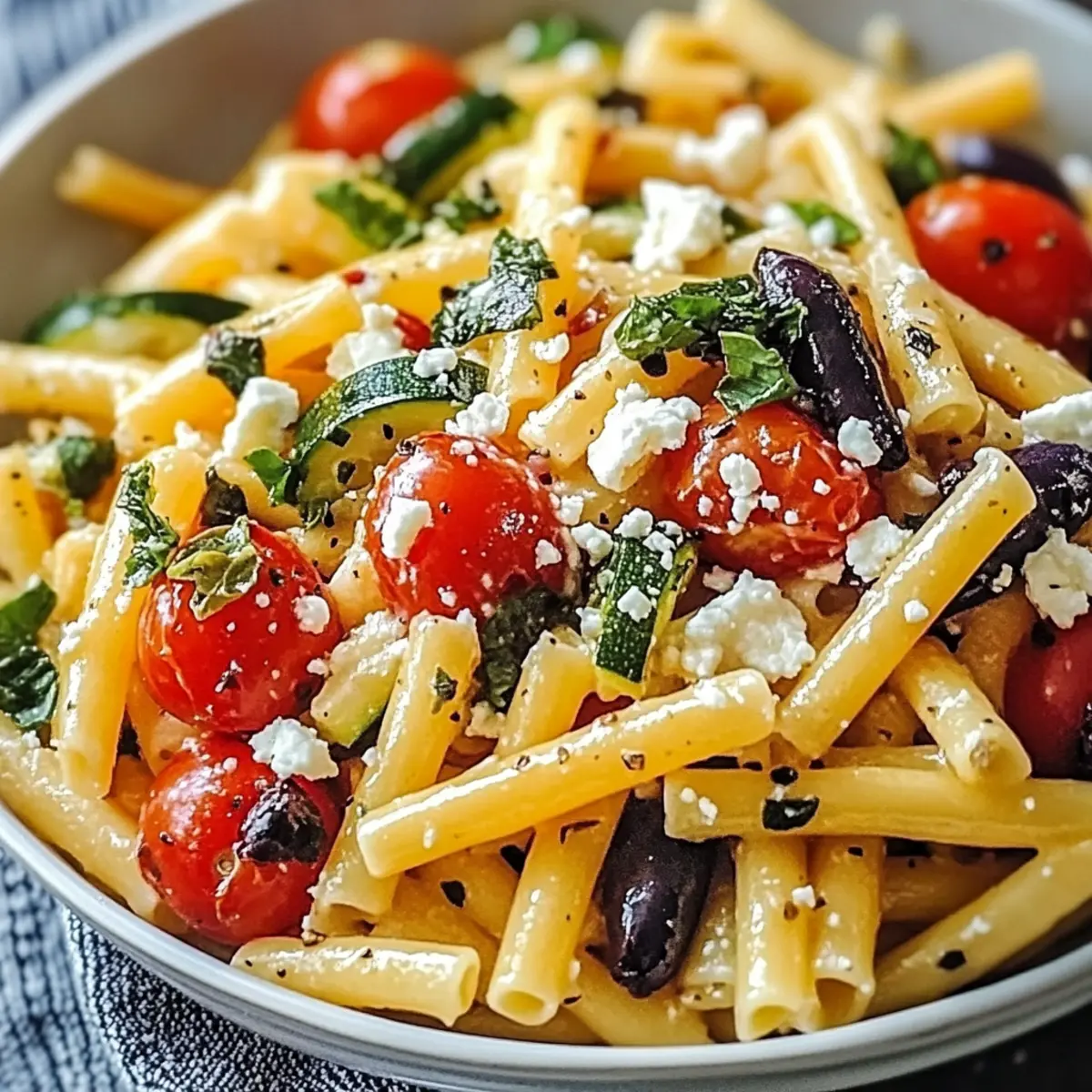
As I tossed together vibrant sun-ripened tomatoes, crumbled feta, and fragrant basil, I realized this Mediterranean Pasta perfectly captures the spirit of sunny days and relaxed evenings. It’s hard not to feel alive when you can whip up a dish that’s ready in under 30 minutes and can be customized with seasonal vegetables. Each twirl of pasta mixes in fresh ingredients, making this meal not only a delight to the eyes but also a healthy choice that satisfies cravings without being heavy. Whether you’re looking to impress guests at a casual gathering or simply seeking a quick weeknight dinner, this recipe is a delightful solution. Are you ready to take your taste buds on a little Mediterranean getaway?
Why is Mediterranean Pasta a Must-Try?
Freshness is at the heart of this Mediterranean Pasta recipe, bursting with seasonal vegetables and vibrant flavors. Quick to prepare, this dish comes together in under 30 minutes—perfect for busy weeknights. Versatile and customizable, you can swap in your favorite ingredients, like adding grilled chicken or shrimp for protein. Crowd-pleasing, it’s an instant favorite for gatherings, and that creamy feta elevates every bite! For more inspiration, check out our Marry Pasta Vegan guide for additional delicious twists! Enjoy a healthy yet satisfying meal that embodies culinary joy!
Mediterranean Pasta Ingredients
• Dive into this delightful Mediterranean Pasta with fresh, vibrant ingredients!
For the Pasta
- Spaghetti or Penne – Choose your favorite shape; both allow for easy mixing with vegetables.
For the Vegetables
- Olive Oil – Use high-quality extra virgin for rich flavor when sautéing.
- Garlic – Minced or sliced; sauté until fragrant to enhance the aroma without burning.
- Sun-ripened Tomatoes – Cherry tomatoes are sweeter; they bring freshness and acidity to the dish.
- Bell Peppers – A mix of colors adds sweetness and an appealing crunch; seasonal varieties can also work.
- Zucchini – Offers tender, mild flavor; feel free to swap with eggplant for a different taste.
- Fresh Basil – Enhances the overall flavor significantly; use fresh for the best results.
- Chili Flakes – Add a spicy kick; adjust based on your spice tolerance.
For the Cheese
- Feta Cheese – This creamy cheese provides tanginess; goat cheese can be a tasty substitute.
For Optional Add-ins
- Olives (Black or Green) – For added saltiness and a burst of flavor, use as desired.
- Grilled Chicken or Shrimp – Add these for a hearty touch if you’re looking for protein options.
Enjoy crafting your Mediterranean Pasta and don’t forget to make it your own!
Step‑by‑Step Instructions for Mediterranean Pasta
Step 1: Boil the Pasta
Bring a large pot of salted water to a boil over high heat. Add your chosen spaghetti or penne. Cook for 8-10 minutes, stirring occasionally, until the pasta is al dente. Once cooked, drain the pasta using a colander, saving a little pasta water if needed later. Set the pasta aside while you prepare the fresh vegetables for your Mediterranean Pasta.
Step 2: Sauté the Garlic
In a large skillet, heat about two tablespoons of high-quality extra virgin olive oil over medium heat. Add minced or sliced garlic, sautéing for 1-2 minutes until fragrant. Be careful not to let the garlic brown, as it can become bitter. This step sets the aromatic foundation for your Mediterranean Pasta, so keep an eye on it for perfect results.
Step 3: Cook the Vegetables
Add sun-ripened cherry tomatoes, colorful bell peppers, and diced zucchini to the skillet with the garlic. Sauté the mixture for 3-5 minutes until the vegetables soften and their colors brighten vibrantly. You want the tomatoes to burst slightly, releasing their juices to enhance the overall flavor of the dish. Stir regularly for even cooking and fragrant aromas.
Step 4: Combine Pasta and Vegetables
Gently fold the drained pasta into the skillet, blending it with the sautéed vegetables. Cook for an additional 2 minutes, ensuring that the pasta is well-coated in the delightful mix. If desired, add a splash of reserved pasta water to help the ingredients marry beautifully. This step is crucial for achieving the perfect consistency and melding flavors in your Mediterranean Pasta.
Step 5: Finish with Fresh Ingredients
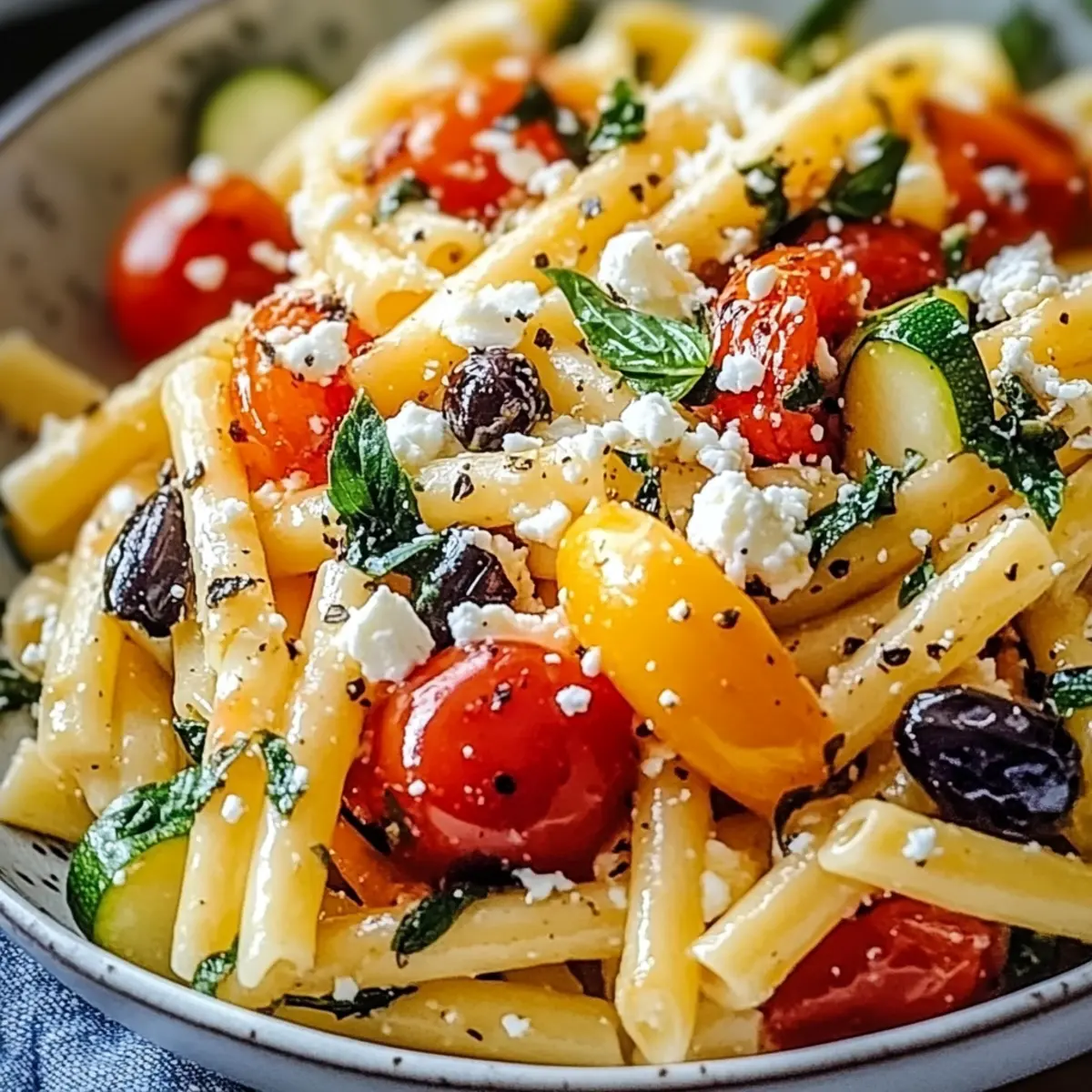
Remove the skillet from the heat, then stir in a generous handful of fresh basil, crumbled feta cheese, and a pinch of chili flakes. Toss everything together until well combined, letting the residual heat slightly soften the cheese. A fresh burst of aromas will fill your kitchen, signaling that your Mediterranean Pasta is ready to be served warm and garnished with extra basil if desired.
Make Ahead Options
These Mediterranean Pasta dishes are perfect for meal prep enthusiasts! You can chop the fresh vegetables (sun-ripened tomatoes, bell peppers, and zucchini) and store them separately in airtight containers in the refrigerator for up to 3 days. If you prefer, you can also cook the pasta ahead of time; just be sure to toss it with a little olive oil to prevent sticking. When you’re ready to enjoy your Mediterranean Pasta, simply sauté the prepped vegetables, add the cooked pasta, and fold in fresh basil and feta. This way, you’ll have a delightful meal on the table with minimal effort, allowing you to savor every bite without the rush—just as delicious as if you made it fresh!
How to Store and Freeze Mediterranean Pasta
Fridge: Store leftovers in an airtight container in the refrigerator for up to 3 days. Reheat gently over low heat on the stove, adding a splash of water or olive oil to retain moisture.
Freezer: For longer storage, freeze the Mediterranean Pasta in an airtight container for up to 2 months. Thaw overnight in the fridge before reheating.
Reheating: Reheat in a skillet over medium heat or in the microwave, adding a little liquid to keep it from drying out. Enjoy your pasta warm for a delicious meal!
Expert Tips for Mediterranean Pasta
-
Use Quality Oil: Choose high-quality extra virgin olive oil to enhance the flavor of your Mediterranean Pasta; it makes a significant difference.
-
Don’t Rush Garlic: Sauté garlic until fragrant but not browned to avoid bitterness; burnt garlic can ruin the dish’s flavor.
-
Customize Vegetables: Feel free to swap in seasonal vegetables based on your preferences; bell peppers and zucchini are just the beginning!
-
Fresh Herbs Matter: Always opt for fresh basil for a burst of flavor; if dried is your only option, use much less to prevent overpowering the dish.
-
Generous Feta: Don’t skimp on the feta cheese; its creaminess is essential in balancing the dish’s flavors and textures.
-
Taste as You Go: Always taste your Mediterranean Pasta before serving; adjust salt, pepper, or chili flakes to suit your personal flavor preferences.
What to Serve with Mediterranean Pasta
As you savor the vibrant flavors of Mediterranean Pasta, consider delightful accompaniments that perfectly round out your meal.
- Garlic Bread: A warm, buttery side with a hint of garlic complements the dishes’ freshness, perfect for mopping up any sauce.
- Crisp Green Salad: A refreshing mix of greens, cucumbers, and a light vinaigrette adds crunch and brightens your palate.
- Roasted Vegetables: Try seasonal favorites like asparagus or bell peppers; their caramelized sweetness enhances the overall meal experience.
- Grilled Chicken or Shrimp: Adding protein not only boosts heartiness but also allows for a flavorful variation to the dish.
- Tzatziki Dip: This cool, yogurt-based dip filled with cucumbers and herbs refreshes each bite, adding a creamy yet tangy note.
- Chilled White Wine: A crisp Chardonnay or Sauvignon Blanc pairs wonderfully, enhancing the Mediterranean experience with every sip.
- Lemon Sorbet: Light and zesty, this dessert cleanses the palate and rounds off your meal perfectly, making it an ideal finish.
Mediterranean Pasta Variations & Substitutions
Feel free to explore these delightful twists and twists on the Mediterranean Pasta, making it truly your own!
- Vegan Option: Swap feta cheese for crumbled tofu or nutritional yeast for a cheesy flavor without dairy.
- Gluten-Free: Use gluten-free pasta made from lentils or chickpeas to maintain a delicious texture without gluten.
- Extra Veggies: Toss in seasonal vegetables like spinach or asparagus for added nutrients and color.
- Protein Boost: Add diced grilled chicken or shrimp, turning your dish into a hearty meal that satisfies hunger.
- Herb Explosion: Try fresh oregano or thyme alongside basil to elevate the herbal notes even more.
- Heat Lovers: Spice things up with diced jalapeños or a dash of sriracha mixed in for a fiery flavor kick!
- Cheese Swap: For a different taste, use goat cheese instead of feta for a creamy, tangy twist. You could also check out our easy guide to Marry Pasta Vegan for a plant-based spin.
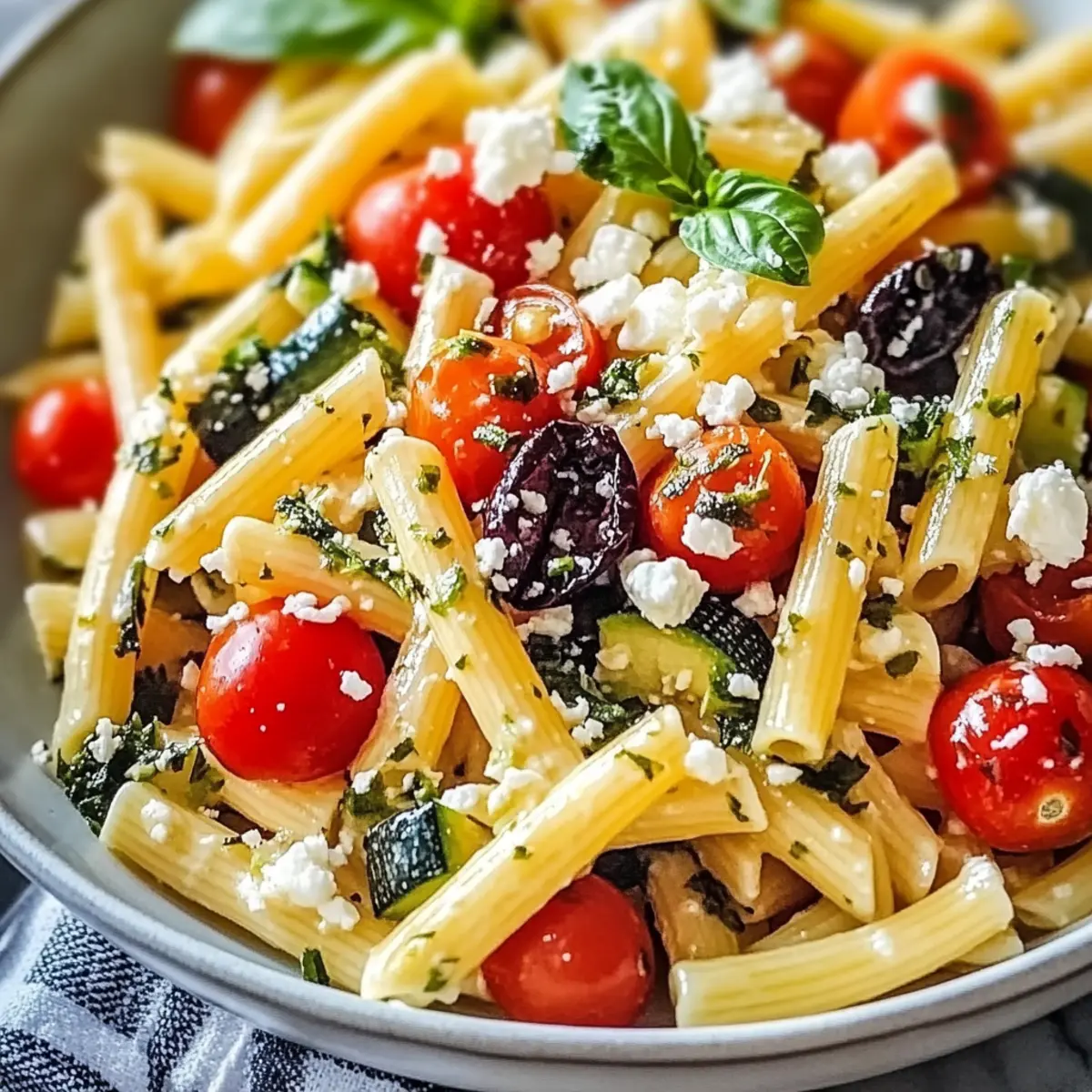
- Pasta Shape Variety: Experiment with farfalle or rigatoni for a fun change in texture and look, adding versatility to this vibrant dish.
Explore these tasty options and let your culinary creativity shine!
Mediterranean Pasta Recipe FAQs
How do I know if my vegetables are ripe for Mediterranean Pasta?
Absolutely! For the best flavor in your Mediterranean Pasta, look for sun-ripened tomatoes that are firm but slightly yielding to the touch, indicating sweetness. Bell peppers should have smooth, shiny skin, and vibrant color, while zucchini should be firm with a glossy finish. Avoid those with dark spots or blemishes, as they might be overripe.
How should I store leftovers of my Mediterranean Pasta?
Very simple! Place any leftover Mediterranean Pasta in an airtight container and store it in the refrigerator for up to 3 days. When you’re ready to enjoy it again, reheat gently over low heat, adding a splash of water or olive oil to keep it moist and flavorful.
Can I freeze Mediterranean Pasta?
Yes, definitely! To freeze your Mediterranean Pasta, ensure it has cooled completely, then place it in an airtight container or a resealable freezer bag. It can be frozen for up to 2 months. To reheat, thaw it overnight in the fridge and warm it in a skillet over medium heat, adding a little water or olive oil for moisture.
What can I do if my pasta is overcooked or mushy?
If your pasta turns out mushy, don’t worry—there are always ways to salvage a meal! You can try mixing in some fresh ingredients, like a handful of fresh spinach or arugula, to add texture. Alternatively, add a sprinkle of breadcrumbs and some additional sautéed vegetables. Toss everything well, and it’ll transform your dish.
Is Mediterranean Pasta suitable for those with dairy allergies?
Good question! Traditional Mediterranean Pasta includes feta cheese, which is not suitable for dairy allergies. However, you can easily adapt this recipe by omitting the cheese altogether or substituting it with a dairy-free feta or nutritional yeast, which provides a cheesy flavor without the dairy.
How can I customize my Mediterranean Pasta for different diets?
The more the merrier! You can easily customize this Mediterranean Pasta recipe to accommodate different dietary needs. For a vegan option, simply omit feta and add extra veggies or a sprinkle of nuts for texture. If you’re looking for protein, consider adding grilled chicken, shrimp, or chickpeas to make it heartier. Feel free to swap in seasonal vegetables for freshness!
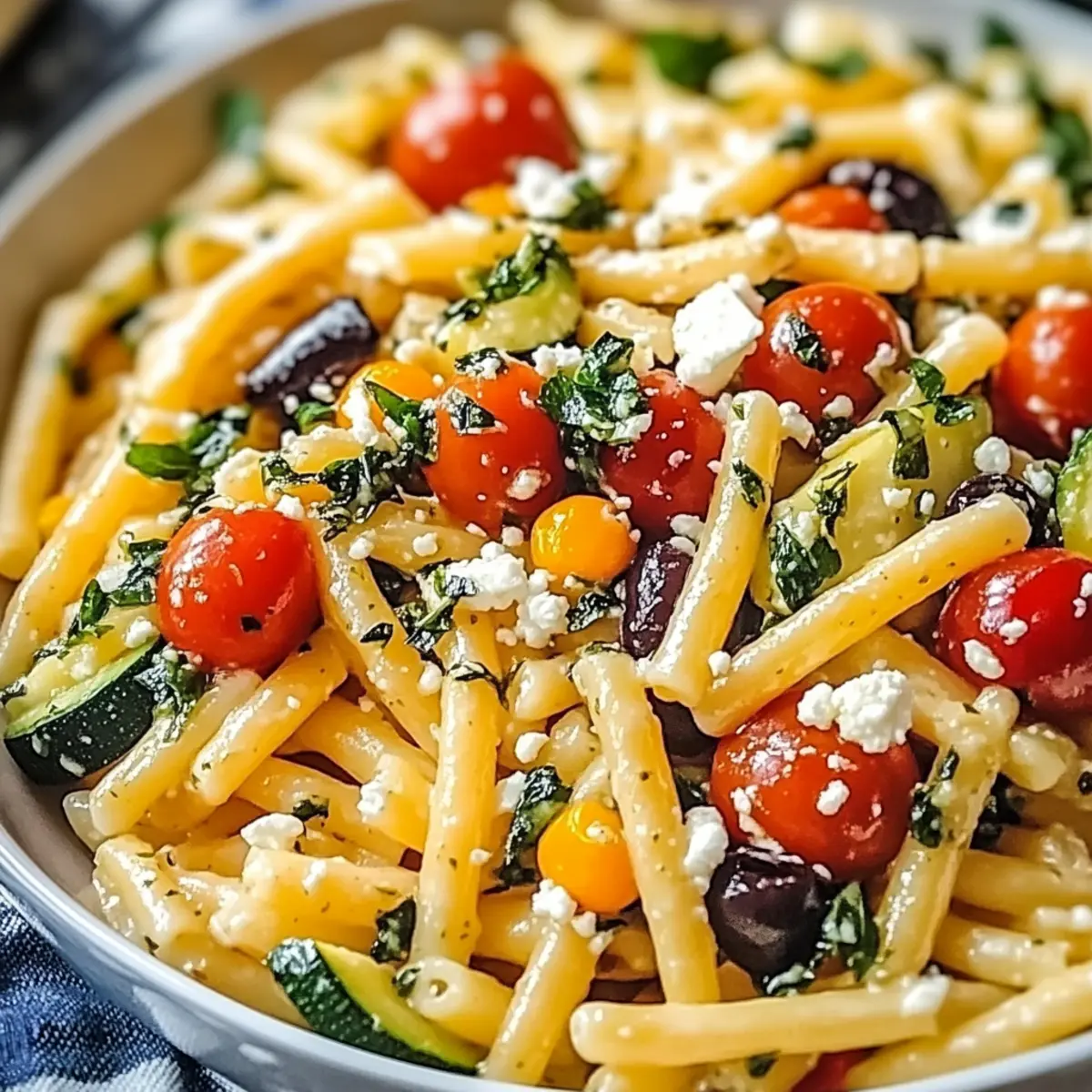
Mediterranean Pasta with Fresh Veggies and Creamy Feta
Ingredients
Equipment
Method
- Bring a large pot of salted water to a boil. Add spaghetti or penne and cook for 8-10 minutes until al dente. Drain and set aside.
- Heat olive oil in a skillet over medium heat. Sauté minced garlic for 1-2 minutes until fragrant.
- Add cherry tomatoes, bell peppers, and zucchini to the skillet. Sauté for 3-5 minutes until vegetables soften.
- Fold the drained pasta into the skillet with the vegetables. Cook for an additional 2 minutes.
- Remove from heat, stir in fresh basil, crumbled feta, and chili flakes until combined.
Leave a Reply