
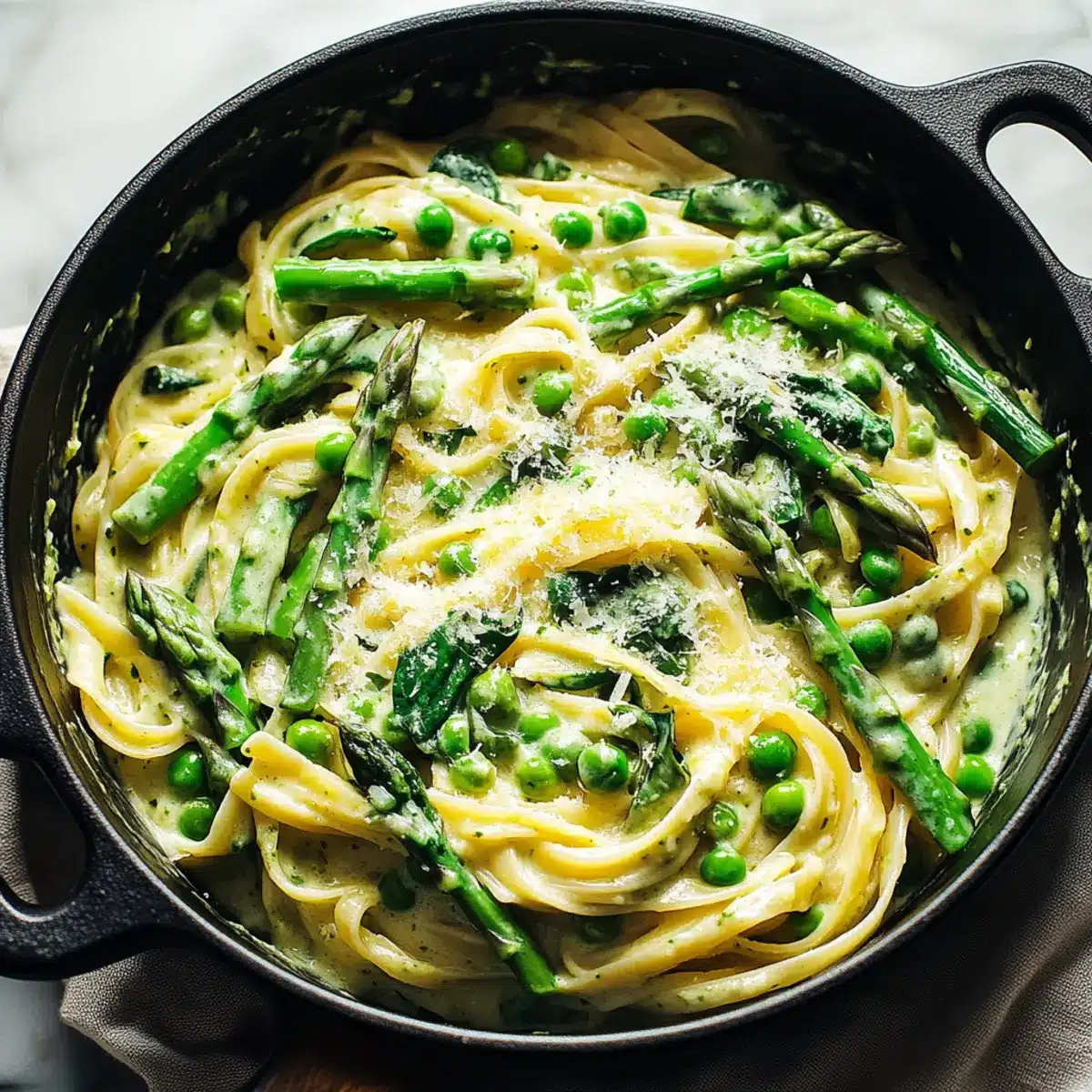
Spring has a way of coaxing vibrant vegetables out of hiding, and I can’t help but get excited about transforming them into a delightful dish. This Creamy Spring Vegetable Pasta is my go-to recipe during this season, featuring tender asparagus, sweet peas, and lush spinach, all wrapped in a light yet luscious lemon-infused sauce. It’s a perfect marriage of fresh flavors and comforting elements, making it ideal for both weeknight dinners and special gatherings. Plus, it’s vegetarian and can easily be made gluten-free, offering a wholesome option that pleases everyone at the table. Are you ready to savor the freshness of spring in every bite?
Why is Spring Vegetable Pasta a Must-Try?
Freshness at Its Peak: This recipe captures the essence of spring with vibrant vegetables like asparagus, peas, and spinach, making every bite a celebration of the season.
Creamy Yet Light: Indulge without guilt! The creamy lemon sauce provides richness while keeping the dish light and satisfying.
Quick & Easy: With straightforward steps, this pasta can be on your table in under 30 minutes, perfect for busy weeknights or last-minute gatherings.
Adaptable Variety: Feel free to switch out vegetables based on what’s fresh in your garden or local market. For those craving protein, try incorporating chicken or shrimp!
Crowd-Pleasing Appeal: This dish is sure to win over even the pickiest eaters, making it a versatile addition to any meal plan.
Spring Vegetable Pasta Ingredients
For the Pasta
• Pasta – Use any type you love; gluten-free options work beautifully too.
For the Sauce
• Olive Oil – Essential for sautéing and adding healthy fats to your dish.
• Garlic – Amplifies flavor; be mindful not to let it brown for the best aroma.
• Heavy Cream – Its richness makes this sauce creamy; consider cashew cream for a non-dairy alternative.
• Lemon Juice & Zest – Brightens the dish and balances the creaminess beautifully.
• Parmesan Cheese – Adds a savory richness; nutritional yeast can fit perfectly for a vegan option.
For the Vegetables
• Asparagus – Offers a delightful crunch and spring flavor; choose vibrant, fresh stalks.
• Frozen Peas – Provide sweetness and a pop of color; feel free to swap in fresh peas if available.
• Baby Spinach – Wils down nicely, contributing both texture and nutrition; adjust to your liking.
This Spring Vegetable Pasta brings the vibrant essence of spring right to your table!
Step‑by‑Step Instructions for Creamy Spring Vegetable Pasta
Step 1: Cook the Pasta
Begin by bringing a large pot of well-salted water to a vigorous boil. Add your favorite pasta and cook according to package instructions until al dente, typically around 8-10 minutes. Stir occasionally to prevent sticking. Just before draining, reserve ½ cup of the starchy pasta water, then drain the pasta and set it aside, ensuring it maintains some heat.
Step 2: Sauté the Vegetables
In a large skillet, heat 2 tablespoons of olive oil over medium heat. Add minced garlic, sautéing until fragrant but not brown, about 1 minute. Next, toss in the asparagus, cooking for 3-4 minutes until it brightens in color and tender-crisp. Stir in the frozen peas and baby spinach, cooking until the spinach wilts, which should take about 2 more minutes. Season with salt and pepper to taste.
Step 3: Make the Creamy Sauce
Lower the heat to medium-low and pour in 1 cup of heavy cream along with the freshly squeezed lemon juice. Let it simmer for 1-2 minutes, stirring gently as the cream thickens slightly. Add in the Parmesan cheese and lemon zest, mixing until melted and fully incorporated into a luscious sauce that beautifully envelops the vegetables.
Step 4: Combine the Pasta and Sauce
Add the drained pasta to the skillet with the creamy spring vegetable sauce. Toss everything gently to ensure the pasta is well-coated with the sauce. If the mixture feels too thick, gradually add reserved pasta water, stirring until you reach a creamy consistency that clings to the pasta beautifully.
Step 5: Serve and Garnish
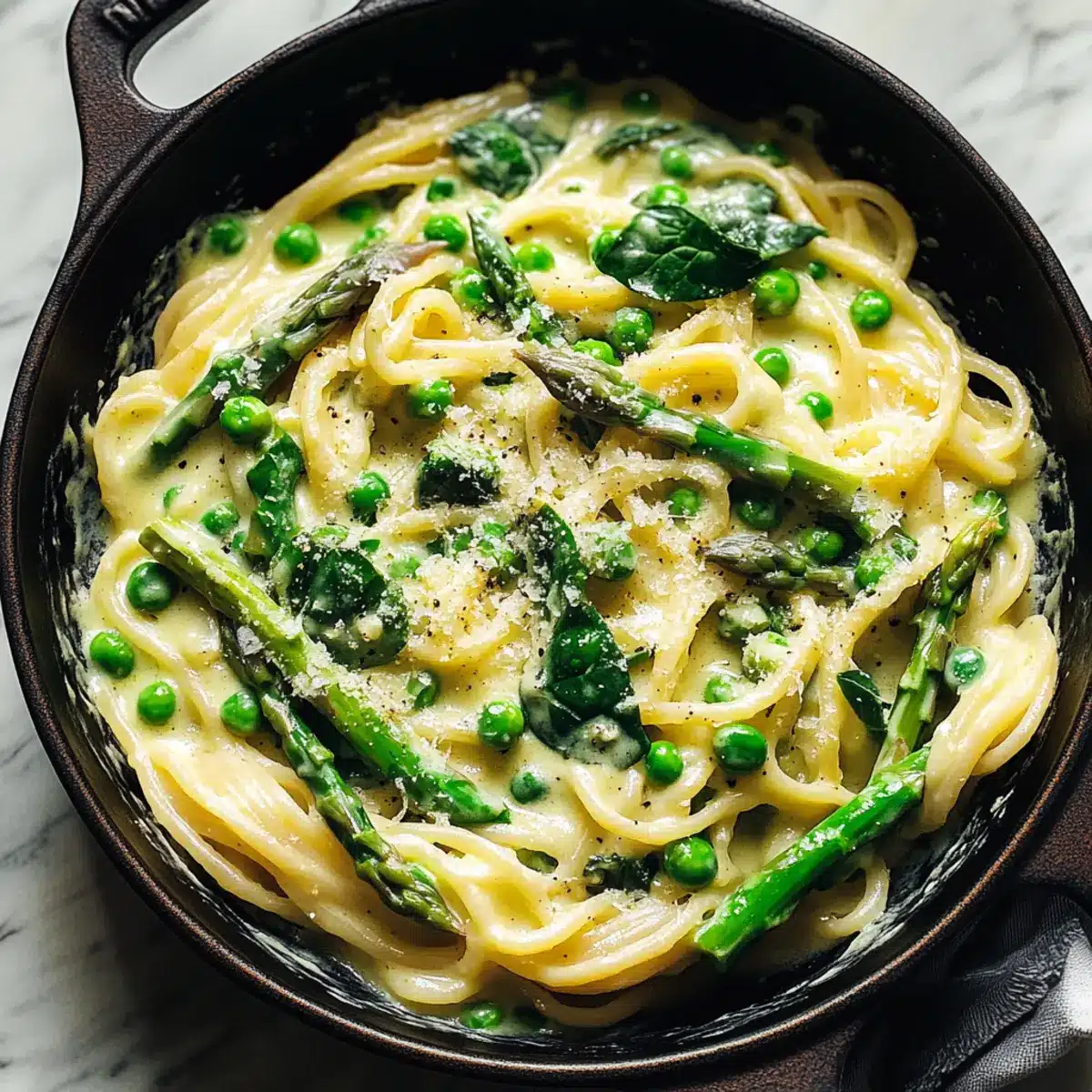
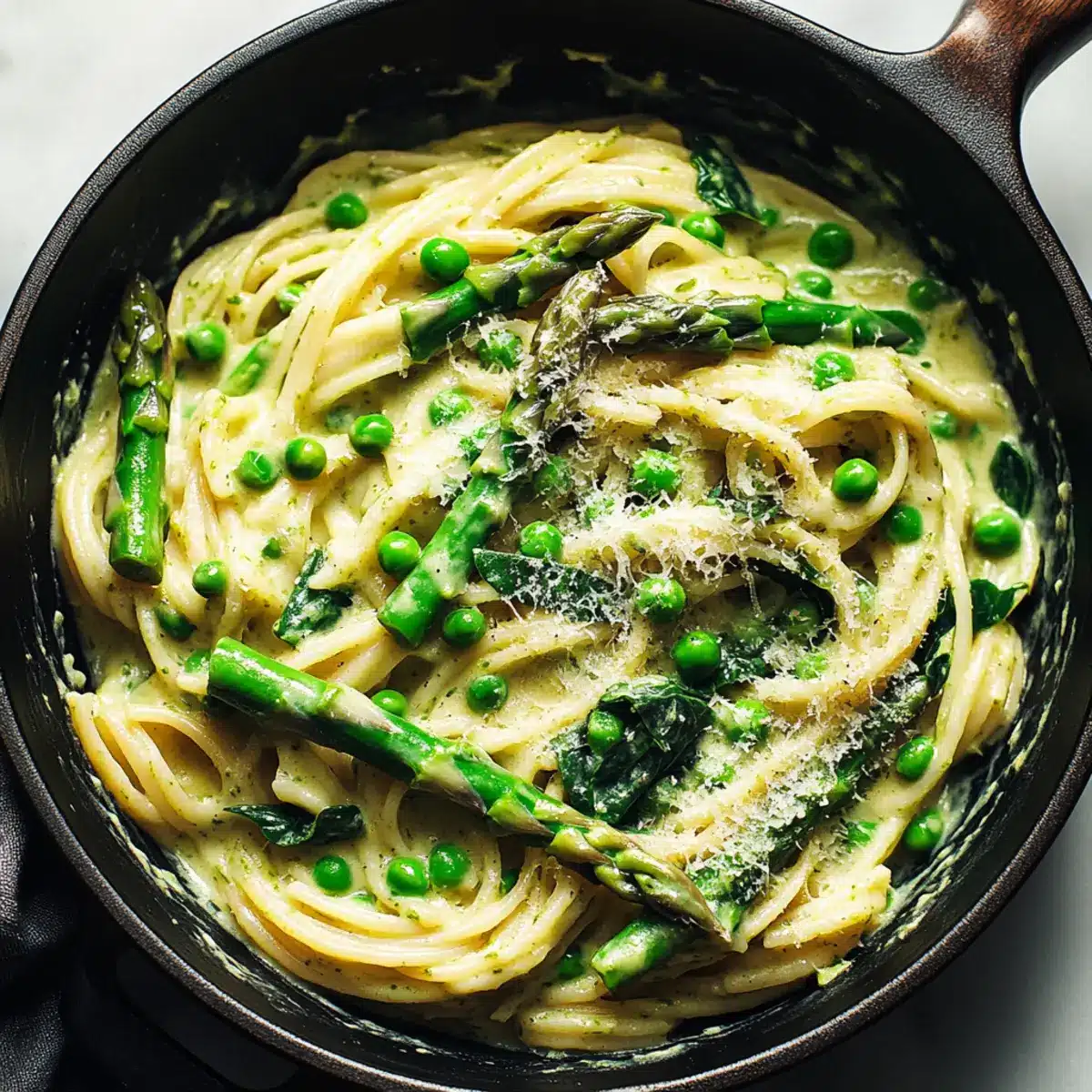
Spoon the delicious creamy spring vegetable pasta onto serving plates. For a finishing touch, sprinkle extra Parmesan cheese, freshly cracked black pepper, and herbs of your choice, like basil or parsley, for added freshness. Enjoy the vibrant flavors and creamy texture that celebrates the essence of spring!
How to Store and Freeze Creamy Spring Vegetable Pasta
Fridge: Store any leftover creamy spring vegetable pasta in an airtight container for up to 3 days. Reheat gently to maintain the creamy texture.
Freezer: If you’d like to freeze the pasta, portion it into freezer-safe containers. It can be frozen for up to 2 months. When ready to eat, thaw overnight in the fridge.
Reheating: Reheat frozen or refrigerated pasta in a skillet over low heat, adding a splash of water or cream to revive the sauce’s creaminess.
Note: Fresh ingredients may lose some texture and flavor after freezing, so it’s best to enjoy this dish fresh!
What to Serve with Creamy Spring Vegetable Pasta
Enjoy your time in the kitchen while creating a well-rounded meal that embraces spring’s freshness and comfort.
- Garlic Bread: The crunchiness of warm, toasted garlic bread makes an irresistible companion, perfect for soaking up the delicious sauce.
- Simple Side Salad: A light salad with mixed greens, cherry tomatoes, and a tangy vinaigrette adds crispness and balances the creaminess of the pasta.
For a touch of elegance, consider pairing your pasta with a chilled glass of White Wine: A crisp Sauvignon Blanc complements the lemony flavors beautifully, enhancing your dining experience.
- Roasted Vegetables: Adding roasted carrots or bell peppers brings extra sweetness and texture to your plate, making it a colorful and vibrant affair.
- Lemon Sorbet: For dessert, a refreshing lemon sorbet cleanses the palate and echoes the dish’s citrus notes, leaving a light and zesty finish.
Consider adding a Sparkling Water with Lime: This fizzy drink refreshes your palate and adds a touch of sophistication to your table setting.
Tips for the Best Spring Vegetable Pasta
• Perfect Pasta Texture: Always cook pasta to al dente for a satisfying bite. Overcooked pasta can become mushy and lose structure in your creamy spring vegetable pasta.
• Garlic Magic: Sauté garlic just until fragrant—watch closely! Browning can turn it bitter and overpower the other fresh flavors.
• Season Wisely: Balance your dish by seasoning vegetables at each step. A pinch of salt and pepper while sautéing enhances their natural flavors in your pasta.
• Cream Consistency: Gradually add reserved pasta water to the sauce until you achieve the desired creaminess. Too much can turn your creamy spring vegetable pasta watery.
• Freshness Matters: Use seasonal veggies whenever possible for the brightest flavors. Asparagus, peas, and spinach shine in this dish—don’t settle for frozen, if fresh is available!
Make Ahead Options
These Creamy Spring Vegetable Pasta dishes are perfect for busy home cooks looking to save time during the week! You can prep the vegetables (asparagus, peas, and spinach) by washing and chopping them up to 24 hours in advance—just store them in an airtight container in the refrigerator to maintain their freshness. Additionally, feel free to cook the pasta ahead of time; just remember to drizzle a bit of olive oil to prevent it from sticking. When you’re ready to enjoy your meal, simply sauté the prepped vegetables, add the cream and seasonings, and incorporate the pasta until heated through. With these make-ahead options, you’ll have a delightful dinner ready to savor in no time!
Spring Vegetable Pasta: Creative Variations
Feel free to get playful and create your own spin on this delightful recipe! Let your imagination and taste guide you.
- Gluten-Free: Substitute traditional pasta with your favorite gluten-free option, such as brown rice pasta or chickpea pasta for a nutritious twist.
- Vegan Delight: Replace heavy cream with cashew cream or coconut milk for a rich, dairy-free version. This maintains the creamy texture while keeping it plant-based.
- Protein-Packed: Add grilled chicken or shrimp for an extra boost of protein. These delicious additions will elevate your dish and make it even more filling.
- Veggie Swap: Opt for seasonal favorites like zucchini or bell peppers in place of asparagus. Each vegetable brings a unique flavor profile, perfect for variety.
- Spice It Up: Heat up your dish with a dash of red pepper flakes or a sprinkle of paprika for a lovely kick that complements the creamy sauce beautifully.
- Herb-Infused: Experiment with fresh herbs such as basil or dill added just before serving. Their aromas will brighten the dish, creating a fresh and inviting presentation.
- Nutty Crunch: Toss in toasted pine nuts or chopped walnuts for a delightful crunch. This adds both texture and an earthy flavor that enhances the overall experience.
- Lemon Lovers: If you adore citrus, go ahead and amp up the lemon zest and juice to brighten the flavors even more. The tangy freshness is sure to elevate every bite!
Don’t forget, if you’re looking for a fantastic, veggie-packed option that you can personalize, check out Marry Pasta Vegan! It’s all about spring freshness and creative cooking in your kitchen!
Creamy Spring Vegetable Pasta Recipe FAQs
What type of pasta is best for this recipe?
Absolutely! You can use any pasta you love—spaghetti, penne, or even gluten-free varieties work wonderfully. Just make sure to cook it al dente for the best texture in your creamy spring vegetable pasta!
How should I store leftover primavera pasta?
Store any leftover creamy spring vegetable pasta in an airtight container in the fridge for up to 3 days. When reheating, do so gently—you can add a splash of water or cream to keep the sauce from drying out, ensuring it stays creamy and delicious!
Can I freeze creamy spring vegetable pasta?
Yes, you can! Allow the dish to cool, then portion it into freezer-safe containers. It keeps well in the freezer for up to 2 months. To enjoy later, just thaw it overnight in the fridge and reheat on low heat, adding a little water or cream to restore the sauce’s smooth texture.
How can I adjust this recipe for dietary restrictions?
Very! For vegans, simply replace the heavy cream with cashew cream and omit the Parmesan, using nutritional yeast instead. If gluten is a concern, choose gluten-free pasta. Always check ingredient labels if you have allergies, particularly with your cheese and cream substitutes.
What if my garlic gets too brown while cooking?
Oh no! If your garlic browns, it can impart a bitter flavor to the dish. If this happens, the best fix is to start again with fresh garlic, sautéing it carefully until just fragrant without allowing it to brown. It might seem like a hassle, but it’s worth it to keep the flavors delightful in your creamy spring vegetable pasta!
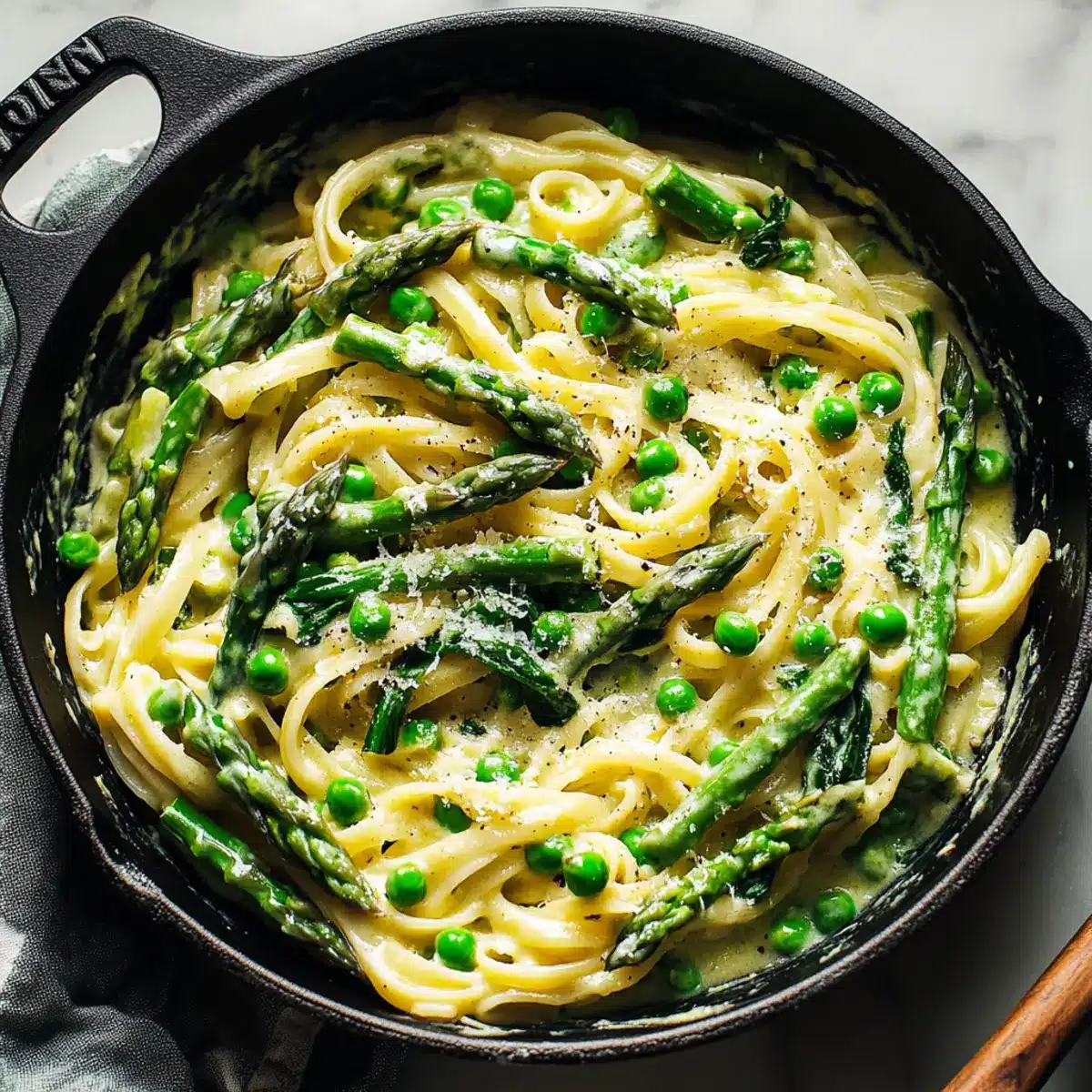
Spring Vegetable Pasta: Creamy, Fresh, and Flavor-Packed!
Ingredients
Equipment
Method
- Bring a large pot of well-salted water to a boil. Add pasta and cook according to package instructions until al dente, about 8-10 minutes. Reserve ½ cup of pasta water, then drain and set aside.
- In a skillet, heat olive oil over medium heat. Sauté garlic until fragrant but not brown, about 1 minute. Add asparagus, cooking for 3-4 minutes until bright and tender-crisp, then stir in peas and spinach, cooking for 2 more minutes until spinach wilts.
- Reduce heat to medium-low, add cream and lemon juice, simmer for 1-2 minutes. Mix in Parmesan cheese and lemon zest until melted and smooth.
- Add drained pasta to skillet with sauce, toss gently to coat. Add reserved pasta water as needed for desired creaminess.
- Spoon pasta onto plates and garnish with extra Parmesan, black pepper, and herbs of your choice. Enjoy!
Leave a Reply