
As I watched my kitchen transform into a Mediterranean oasis, the vibrant colors of cherry tomatoes and fresh spinach danced before me. Greek Spaghetti is a delightful one-pot pasta dish that brings together the freshest, most classic Greek flavors with ease. This recipe, featuring a homemade olive oil and vinegar dressing, is not just a quick weeknight meal; it’s also a showstopper that can impress your family or friends at any gathering. With its wholesome ingredients like kalamata olives, feta cheese, and a medley of vegetables, this vegetarian pasta dish combines comfort with nutrition, making it the perfect choice for those eager to escape the fast-food rut. Are you ready to indulge in this simple yet satisfying culinary journey?
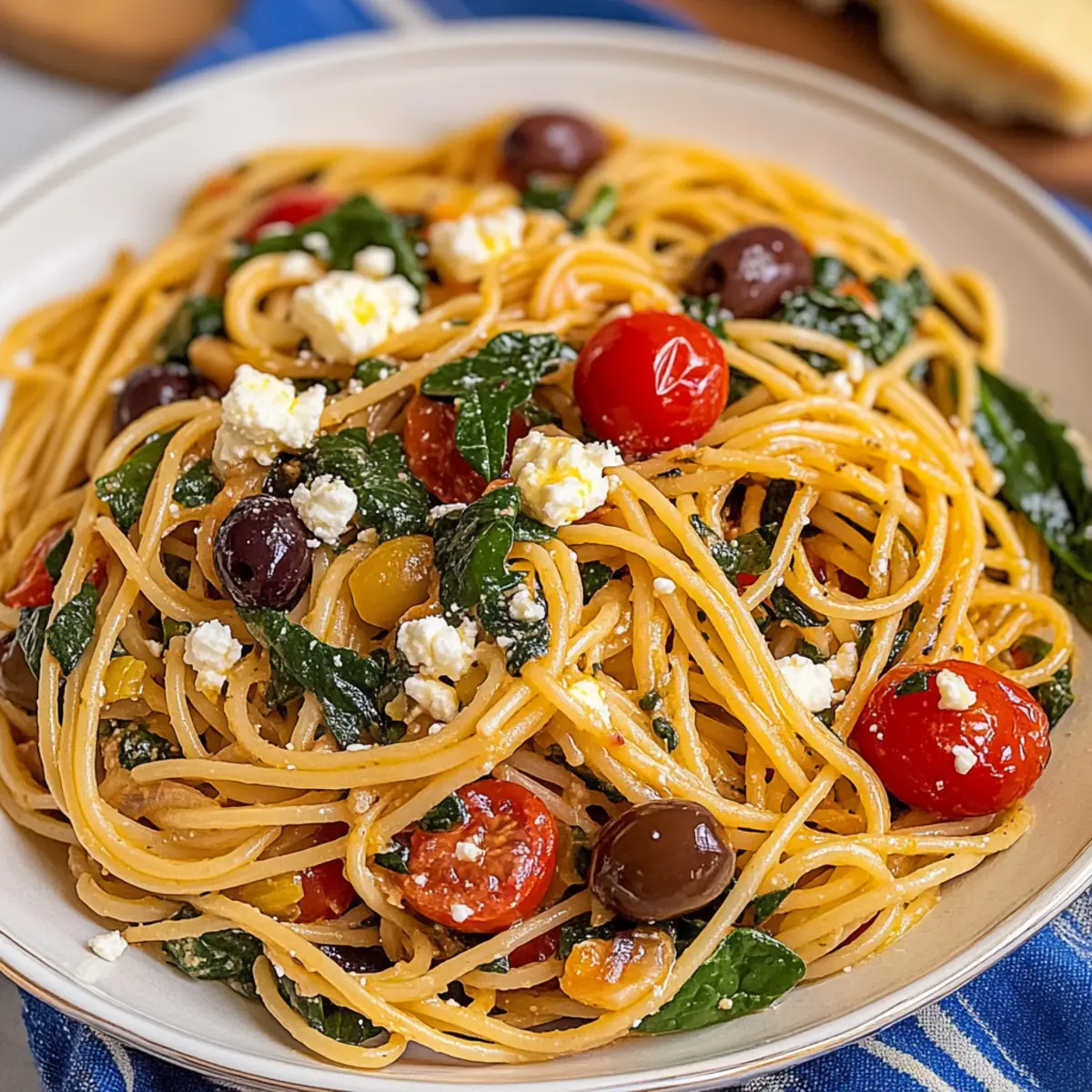
Why is Greek Spaghetti a Must-Try?
Bursting with flavor, this Greek Spaghetti will transport you straight to the Mediterranean with every bite! Easy to prepare, it requires minimal cooking skills while delivering on taste, making it perfect for busy weeknights. Wholesome ingredients like kalamata olives and juicy cherry tomatoes not only tantalize your taste buds but also nourish your body. Versatile enough for variation, you can easily customize it by adding grilled chicken or seasonal veggies. With its eye-catching colors and vibrant flavors, it’s a dish that’s sure to impress guests or satisfy your family, all while keeping dinner exciting. Want to elevate your pasta game? Don’t miss out on this delightful recipe!
Greek Spaghetti Ingredients
Here’s what you’ll need for this mouthwatering Greek Spaghetti:
For the Pasta
• Spaghetti – serves as the comforting base to soak up all that delicious dressing.
For the Dressing
• Olive Oil – opt for high-quality extra virgin for the best flavor in your dressing.
• Red Wine Vinegar – adds a tangy bite; you can swap with white wine vinegar for a milder taste.
• Lemon Juice – fresh juice balances the flavors beautifully and brightens the dish.
• Garlic – fresh minced garlic delivers a savory kick that enhances the entire meal.
• Red Onion – sweet and fragrant; finely diced for even distribution of flavor.
• Dried Oregano – traditional herb for an authentic Greek flavor; substitute with Italian seasoning if needed.
• Kosher Salt – elevates the flavors without overpowering; sea salt is a great alternative.
• Ground Black Pepper – adds a subtle warmth, adjustable to your taste.
For the Vegetables
• Cherry Tomatoes – choose sweet and juicy tomatoes to add color and freshness to the dish.
• Fresh Baby Spinach – nutrient-packed greens that wilt down beautifully, adding a splash of health.
• Kalamata Olives – iconic briny flavor; feel free to substitute with black olives if preferred.
For the Finish
• Feta Cheese – creamy and tangy; toss in extra for cheese lovers!
• Fresh Basil Leaves – offers aromatic freshness; parsley works if basil is unavailable.
Optional Garnish
• Fresh Chopped Basil or Parsley – a lovely finishing touch for presentation and flavor.
Now that you’re all set with the delicious ingredients for your Greek Spaghetti, let’s get cooking!
Step‑by‑Step Instructions for Greek Spaghetti
Step 1: Cook Spaghetti
In a large pot, bring salted water to a boil over high heat. Add the spaghetti and cook according to the package instructions, usually about 8-10 minutes, until al dente. Reserve about a cup of the pasta water before draining the spaghetti in a colander. This will help adjust the sauce later if needed, ensuring your Greek Spaghetti remains flavorful and moist.
Step 2: Sauté Onions
While the spaghetti cooks, heat 2 tablespoons of olive oil in a large skillet over medium heat. Add the finely diced red onion and sauté for about 5 minutes until it becomes soft and translucent. This step releases the onion’s natural sweetness, creating a flavorful base for your Greek Spaghetti, which will soon be combined with fresh ingredients.
Step 3: Add Garlic
Next, stir in the minced garlic into the skillet and continue to sauté for about 1 minute, just until fragrant. You’ll know it’s ready when the garlic turns golden and aromatic. Be careful not to let it burn, as this can create a bitter taste. This garlic-infused oil will add depth and richness to the overall flavors of your dish.
Step 4: Cook Tomatoes and Spinach
Add the halved cherry tomatoes to the skillet, along with the remaining olive oil, and sauté for about 3-4 minutes. The tomatoes should start to soften and release their juices, adding a fresh burst of flavor. Then, gently fold in the fresh baby spinach and cook for an additional 2-3 minutes, until the spinach wilts down nicely, incorporating vibrant greens into your Greek Spaghetti.
Step 5: Combine Flavors
Sprinkle in the kalamata olives, fresh lemon juice, red wine vinegar, dried oregano, kosher salt, and ground black pepper into the skillet with the vegetables. Stir the mixture and let it cook for about 1 minute, allowing the flavors to meld together beautifully. This aromatic blend creates the signature taste you’ll love in your Greek Spaghetti, enhancing each bite.
Step 6: Mix Pasta
Carefully add the drained spaghetti into the skillet, tossing it gently to coat with all the scrumptious vegetable mixture. For more moisture and flavor, incorporate a bit of the reserved pasta water gradually until you reach your desired consistency. The pasta should be well-integrated with the ingredients, inviting and ready for a delightful finish.
Step 7: Finish with Cheese and Herbs
Finally, remove the skillet from the heat and add in the crumbled feta cheese and fresh basil leaves. Gently fold everything together until the cheese begins to soften and merge with the pasta and veggies. This step adds creaminess and a burst of flavor to your Greek Spaghetti, making it ready to serve hot, colorful, and full of life.
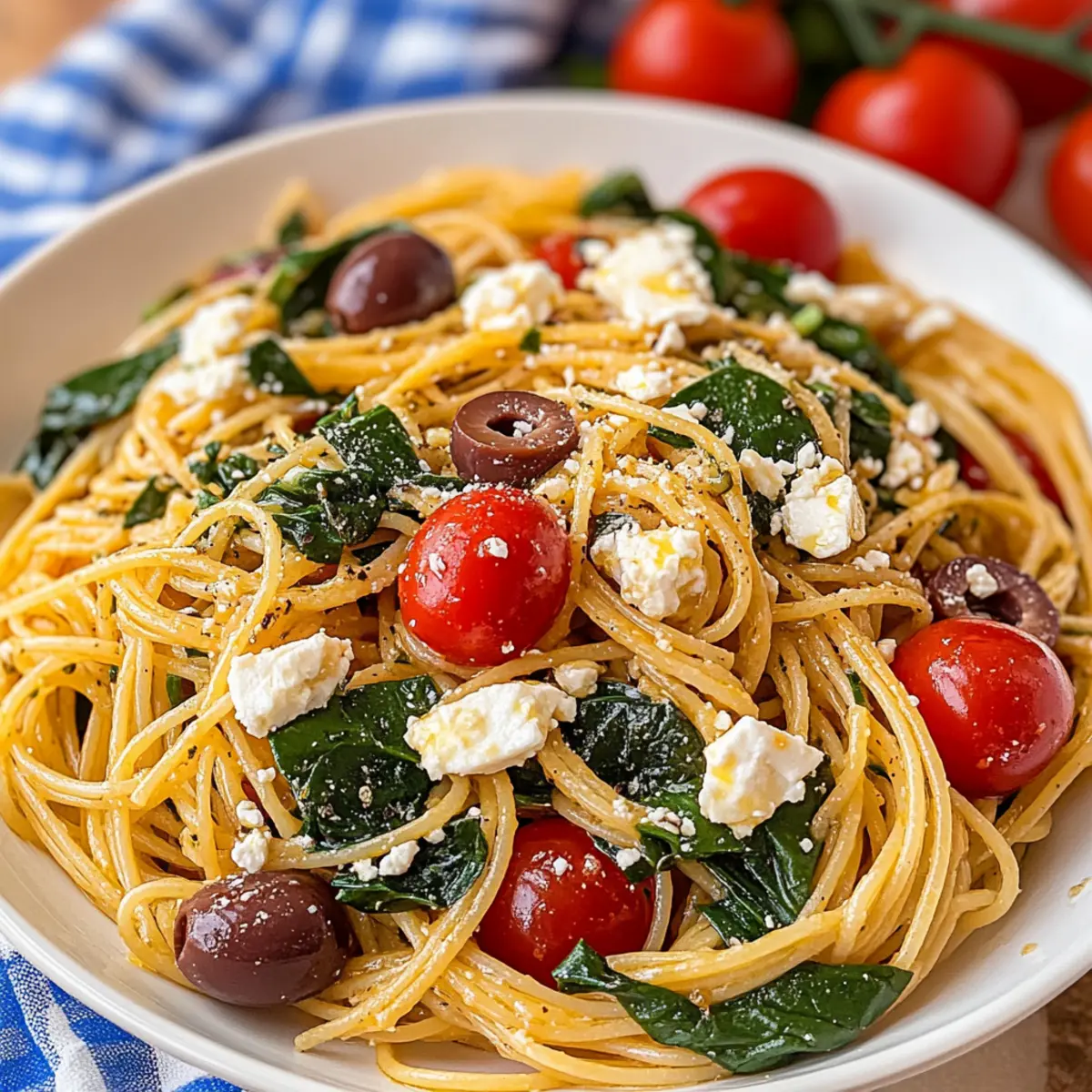
What to Serve with Greek Spaghetti
Creating a delightful meal around Greek Spaghetti opens up an array of flavorful possibilities that elevate your dining experience.
- Garlic Bread: Soft, buttery garlic bread adds crunch and a savory aroma, perfect for scooping up pasta remnants.
- Grilled Vegetables: A colorful mix of grilled zucchini and bell peppers complements the Mediterranean flavors while adding a smoky depth.
- Greek Salad: This fresh medley of cucumbers, tomatoes, olives, and feta offers a crisp contrast, balancing the rich flavors of the spaghetti.
- Tzatziki Sauce: A dollop of cool, creamy tzatziki brings refreshing relief, making every bite a delightful experience.
- Lemonade Spritzer: The tangy sweetness of a lemonade spritzer can cut through the richness of the dish, refreshing your palate.
- Pita Chips: These crispy snacks are perfect for scooping or enjoying alongside, bringing a delightful crunch that complements soft pasta.
- Roasted Potatoes: Herbed roasted potatoes offer a hearty side option, echoing the Mediterranean seasoning of the spaghetti while satisfying hungry appetites.
- Baklava: End your meal on a sweet note with this nutty, honey-drenched pastry, which contrasts beautifully with the savory flavors of Greek Spaghetti.
Storage Tips for Greek Spaghetti
- Fridge: Store leftovers in an airtight container for up to 4-5 days. Be sure to toss well before serving, as the dressing may settle.
- Freezer: Greek Spaghetti can be frozen for up to 2 months. Portion into freezer-safe containers and thaw in the fridge overnight before reheating.
- Reheating: Reheat gently on the stovetop over low heat, adding a splash of reserved pasta water if needed to maintain moisture and flavor.
- Make-Ahead: Prepare this dish a day in advance for busy nights; just keep the pasta and dressing separate until mealtime to preserve the freshest taste.
Make Ahead Options
Greek Spaghetti is an excellent choice for meal prep enthusiasts! You can prepare the dressing (olive oil, vinegar, lemon juice, and seasonings) up to 3 days in advance and store it in an airtight container in the refrigerator to ensure vibrant flavors. Additionally, feel free to chop the vegetables—like red onion, tomatoes, and spinach—24 hours beforehand for speedy assembly. To maintain quality, keep the cooked spaghetti separate until you’re ready to serve; this prevents it from becoming mushy. When you’re ready to enjoy your Greek Spaghetti, simply heat the vegetables in a skillet, toss in the cooked pasta, and mix in your dressing for a delicious meal with minimal effort!
Greek Spaghetti Variations & Substitutions
Feel free to let your creativity shine while making this Greek Spaghetti recipe! Each twist can bring out something special in this beloved dish.
- Gluten-Free Pasta: Substitute spaghetti with gluten-free pasta for a trendy and nourishing option that’ll suit everyone.
- Seasonal Veggies: Add zucchini or bell pepper to the mix during sautéing for a delicious update and extra color! These ingredients bring great texture and enhance the veggie profile.
- Protein Boost: Toss in grilled chicken or chickpeas for a hearty version—perfect for those who crave additional protein without sacrificing flavor.
- Herb Infusion: Swap fresh basil with fresh parsley or mint for a change in flavor. Each herb brings unique qualities to the dish, enhancing its freshness in surprising ways.
- Cheese Variations: Use goat cheese instead of feta for a tangy alternative. Its smooth texture and robust flavor will surprise your taste buds!
- Vinegar Switch: Replace red wine vinegar with white wine vinegar for a milder acidity that still brightens the dish; lemon juice is another lovely option for a zesty kick.
- Heat It Up: Add crushed red pepper flakes to the sauté for those who enjoy a little kick! Adjust to personal heat levels for perfect comfort.
- Nutty Addition: Incorporate toasted pine nuts or walnuts for added crunch and a delightful nutty flavor, taking your Greek Spaghetti to new heights.
Remember, every variation brings your unique touch to this dish while allowing you to explore different flavors. If you’re excited to mix things up, consider trying the Black Pepper Rub on your veggies to add a savory flair that pairs well with the yogurt or feta. Enjoy the journey of creating your perfect bowl!
Expert Tips for Greek Spaghetti
- Pasta Perfection: Always cook spaghetti al dente to prevent it from becoming mushy in the dish. A little bite adds to the overall texture!
- Moisture Control: Reserve some pasta water before draining; adding a splash can help achieve your desired creamy consistency without drying out the Greek Spaghetti.
- Fresh is Best: Use fresh ingredients, particularly for garlic and herbs, to elevate your flavors. Dried alternatives can work but won’t give the same vibrant taste.
- Feta Freedom: Adjust the amount of feta cheese based on your preference; more cheese enhances creaminess, while less keeps it light.
- Ingredient Balance: Be cautious with the number of kalamata olives as they can be quite salty. Start with a smaller amount and adjust according to your taste!
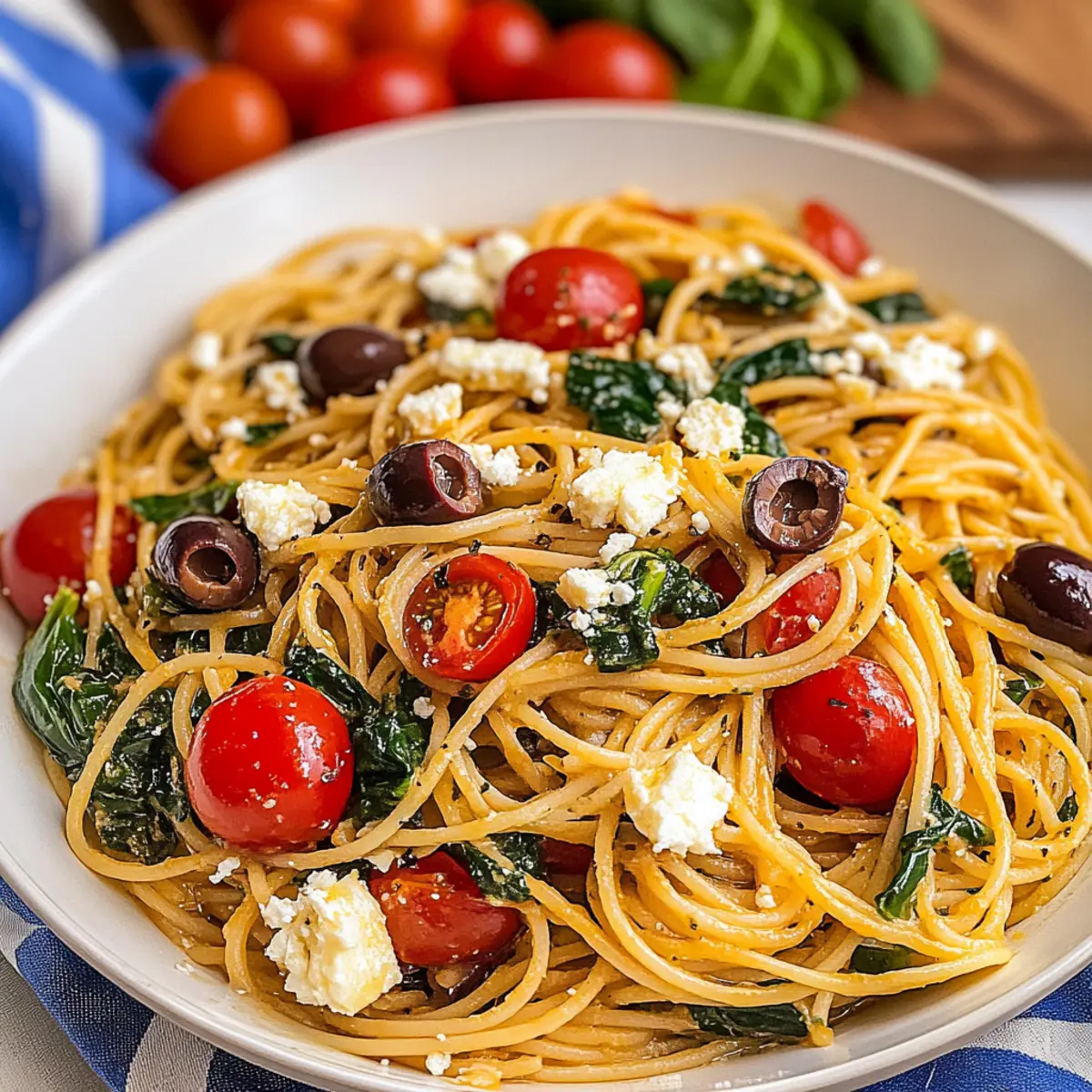
Greek Spaghetti Recipe FAQs
What type of spaghetti should I use for Greek Spaghetti?
For the best texture and flavor, I recommend using regular durum wheat spaghetti. However, if you’re gluten-sensitive, gluten-free pasta options like brown rice or lentil pasta work well too!
How long can I store leftover Greek Spaghetti?
You can store leftovers in an airtight container in the fridge for up to 4-5 days. Just remember to toss everything well before serving, as the dressing can settle and separate over time.
Can I freeze Greek Spaghetti?
Absolutely! Greek Spaghetti can be frozen for up to 2 months. Simply portion the dish into freezer-safe containers, ensuring they’re sealed tightly. When you’re ready to enjoy it again, thaw it in the fridge overnight and reheat gently on the stovetop, adding a splash of reserved pasta water if needed to restore its moisture.
How can I modify Greek Spaghetti to accommodate dietary restrictions?
If you’re concerned about allergies, be mindful of the feta cheese and olives, as they can be quite salty. You can easily swap them for dairy-free cheese or omit them entirely for a lighter version. Additionally, check labels on pasta to ensure they meet gluten-free standards if required.
What ingredients should I look for to ensure freshness?
Always choose fresh garlic and herbs for the most aromatic flavors. Look for bright, firm cherry tomatoes without any dark spots, and opt for kalamata olives that are plump and preserve their rich color. Fresh baby spinach should be vibrant and crisp, enhancing the overall quality of your Greek Spaghetti dish!
What common issues can I avoid when making Greek Spaghetti?
To prevent a dry dish, remember to reserve some pasta water before draining. If you find your Greek Spaghetti too dry, add a little bit of that reserved pasta water while mixing. Also, be cautious not to overcook the garlic; just sauté it until it’s fragrant to prevent any bitterness. Enjoy your cooking adventure!
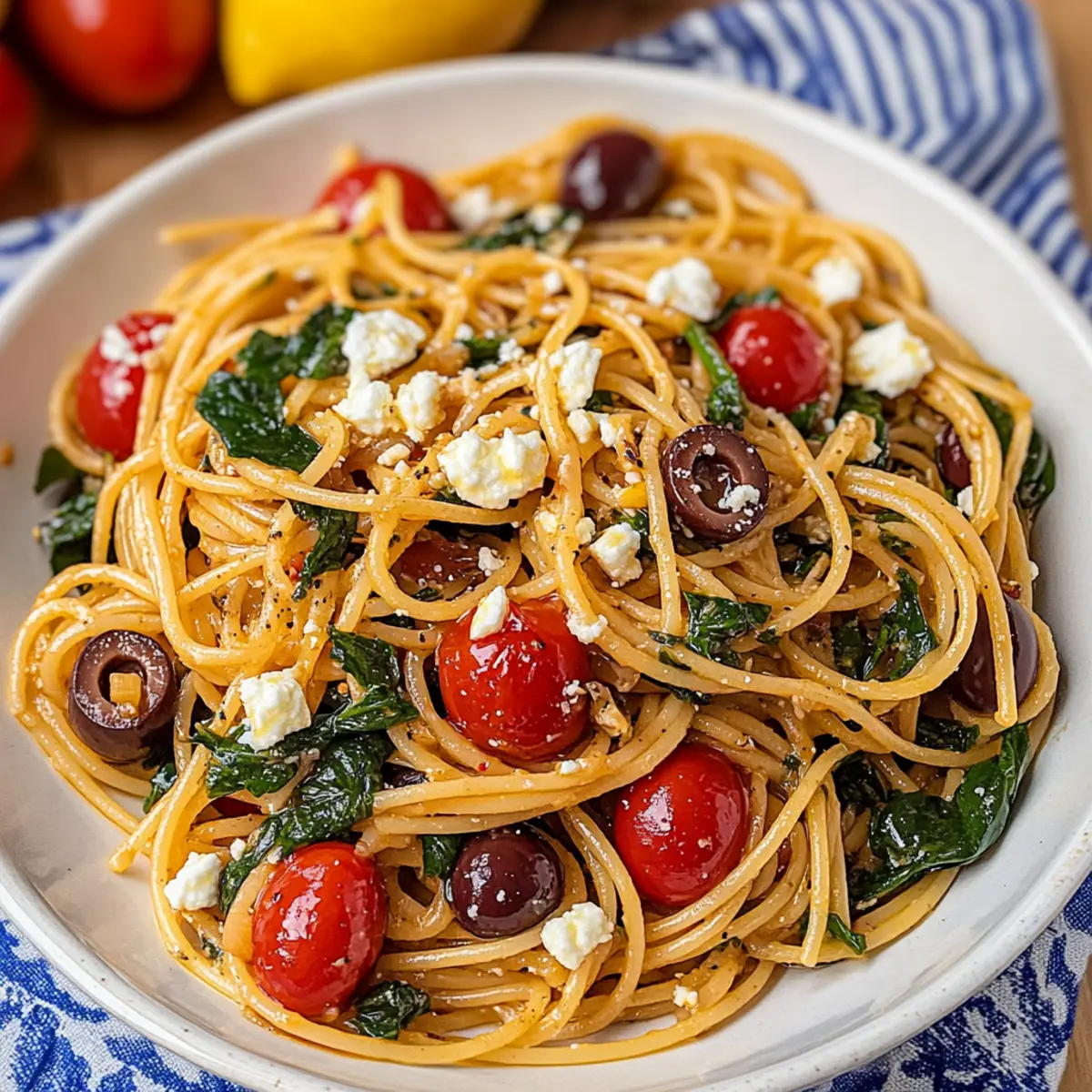
Delicious Greek Spaghetti: A Flavorful Weeknight Delight
Ingredients
Equipment
Method
- In a large pot, bring salted water to a boil. Add spaghetti and cook according to package instructions, about 8-10 minutes, until al dente. Reserve a cup of pasta water before draining.
- In a large skillet, heat 2 tablespoons olive oil over medium heat. Add diced red onion and sauté for about 5 minutes until soft and translucent.
- Stir in minced garlic and sauté for about 1 minute until fragrant, being careful not to burn it.
- Add halved cherry tomatoes and remaining olive oil to the skillet. Sauté for 3-4 minutes until softened, then gently fold in fresh spinach and cook for an additional 2-3 minutes.
- Add kalamata olives, lemon juice, red wine vinegar, oregano, salt, and pepper to the skillet and cook for 1 minute, stirring to combine.
- Carefully add drained spaghetti to the skillet and toss to coat, adding reserved pasta water gradually as needed for desired consistency.
- Remove from heat and fold in crumbled feta cheese and fresh basil leaves until cheese begins to soften.
Leave a Reply